

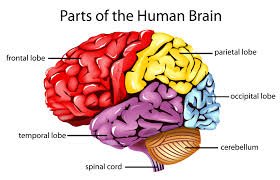
The Amazing Structure of the Human Brain
The human brain is a remarkable organ, composed of various parts that each play a distinct role in our overall functionality. At the forefront is the cerebrum, which is divided into two hemispheres and is responsible for higher cognitive functions such as thought, sensory perception, and voluntary movement. Within the cerebrum, there are specialized regions such as the frontal lobe, which governs decision-making and personality, and the occipital lobe, dedicated to visual processing.
Connecting the cerebrum and the spinal cord is the brain stem, which is essential for regulating autonomic functions like breathing and heart rate. Additionally, the cerebellum, located at the back of the brain, plays a critical role in maintaining balance and coordinating voluntary muscle movements. This intricate structure exhibits a high degree of connectivity, where neurons, the primary signaling cells of the brain, communicate through synapses to process information swiftly.
Neurons are supported by glial cells, which provide structural and functional support, ensuring optimal conditions for neuronal activity. The human brain comprises approximately 86 billion neurons, illustrating the complexity and capacity for processing information. To protect and nourish this intricate network, the brain is encased in protective layers known as the meninges, which consist of three membranes: dura mater, arachnoid mater, and pia mater. Furthermore, the brain receives blood supply via the carotid and vertebral arteries, which are crucial for delivering oxygen and nutrients, solidifying the essential role of vascular health in maintaining cognitive function.
Functions of the Brain: The Control Center of the Body
The human brain, often hailed as the control center of the body, performs a plethora of essential functions that are crucial for survival and quality of life. At its core, the brain regulates vital autonomic functions such as breathing and heart rate, ensuring that physiological processes operate smoothly without conscious intervention. This unconscious regulation allows the body to maintain homeostasis, vital for overall health.
Beyond these foundational tasks, the brain is also responsible for motor control, orchestrating movement through complex signaling pathways. By transmitting signals through the nervous system, the brain enables both voluntary movements, like walking and writing, and involuntary movements, such as reflexes. This coordination of activities is pivotal in allowing individuals to interact with their environment effectively.
Moreover, the brain manages higher cognitive functions that differentiate humans from other species, such as thought processes, memory formation, and emotional responses. The cerebral cortex, the outer layer of the brain, plays a crucial role in these cognitive abilities, facilitating reasoning, decision-making, and understanding complex concepts. Additionally, the limbic system contributes to emotional regulation and responses, highlighting the interplay between cognition and emotion in daily life.
Another vital aspect of the brain’s function is its ability to process sensory information. Our sensory organs relay data concerning sight, sound, taste, touch, and smell to the brain, which interprets and integrates this information for coherent perception. This sensory processing is fundamental for how we interact socially and navigate our surroundings.
Finally, a remarkable characteristic of the brain is its neuroplasticity—the ability to adapt and reorganize itself in response to experiences and learning. This capacity for change throughout life enables individuals to acquire new skills, recover from injuries, and adjust to changing environments, illustrating the brain’s dynamic nature and its central role as the command center of all bodily functions.
What Makes the Human Brain Unique?
The human brain stands out distinctively in the animal kingdom owing to several remarkable features. One of the most prominent characteristics is its size and structure, particularly when considered in relation to body size. The human brain, weighing approximately 1.4 kilograms, is relatively larger compared to those of other species. This significant brain-to-body mass ratio, often referred to as the encephalization quotient, suggests an advanced capability for complex functions.
In addition to its size, the complexity of neural connections within the human brain is unparalleled. Humans possess around 86 billion neurons, each forming synapses with approximately 7,000 other neurons. This intricate web of neural pathways facilitates advanced cognitive functions such as reasoning, problem-solving, and decision-making. The highly developed prefrontal cortex, responsible for executive functions, underscores the brain’s role in higher-order thinking and abstract thought.
Language proficiency further differentiates the human brain from that of other species. The ability to communicate nuanced ideas through language is uniquely advanced in humans, enabling the formation of complex societies and cultures. This linguistic capability is often closely linked to cognitive skills, providing a means for storing knowledge, sharing experiences, and fostering social bonds.
The inclination for creativity and emotional depth also significantly contributes to what makes the human brain unique. These traits allow for artistic expression, innovation, and empathy, all of which enrich human interaction and social coherence. Thus, the combination of size, structural complexity, linguistic ability, and emotional and creative faculties underlines the distinctive nature of the human brain, illustrating its vital role in shaping the human experience.
The Complexity of the Human Brain: Ongoing Scientific Discoveries
The human brain remains one of the most complex and enigmatic structures known to science, with ongoing discoveries continually reshaping our understanding of its intricate workings. Neuroscientists face significant challenges as they endeavor to unravel the mysteries of brain function. One fundamental limitation is the technology currently available. While advancements in neuroimaging techniques, such as functional magnetic resonance imaging (fMRI) and positron emission tomography (PET), have provided valuable insights, they still cannot fully capture the dynamic and multifaceted nature of neural processes in real time.
Moreover, researchers encounter ethical considerations that complicate the landscape of neuroscience. The study of the human brain often involves sensitive issues related to privacy, informed consent, and the potential misapplication of findings. These ethical concerns highlight the need for responsible research practices, particularly when addressing topics such as brain enhancement or neurodiversity. Balancing scientific progress with ethical integrity remains a priority for the field.
Despite these challenges, recent advancements in computational modeling have enriched our understanding of brain behavior. By simulating complex neural networks, researchers can test hypotheses and predict outcomes based on theoretical frameworks. This innovative approach not only aids in decoding the brain’s processes but also has profound implications for various domains. For instance, insights gained from brain research are influencing areas such as psychology and medicine, leading to improved approaches for treating mental health disorders and neurological conditions. Additionally, these discoveries have vital implications for artificial intelligence, where understanding human cognitive processes can drive developments in machine learning and robotics.
In summary, the complexity of the human brain presents both challenges and opportunities for scientific inquiry. As researchers continue to push the boundaries of knowledge, we edge closer to unlocking the secrets of this remarkable organ, with implications that could redefine our understanding of cognition and consciousness.